
 F MODERN CULTURE FEELS LOUDER, faster, and more chaotic than ever, you're not imagining it. From viral social media trends and celebrity news cycles to political discourse embedded in music, film, television, and fashion, pop culture today is constantly competing for attention. Every moment seems to bring a new meme, a trending hashtag, or a headline that demands engagement, creating a near-constant stream of cultural stimuli. In this whirlwind, entertainment, commentary, and controversy blur together, making it harder than ever to pause, reflect, or simply catch our breath amidst the noise.
THE END OF GATEKEEPERS
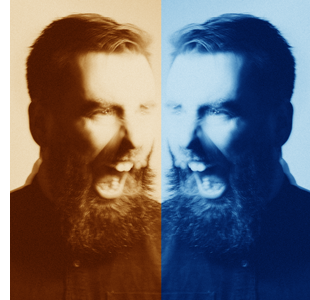 The reason? Culture is no longer filtered through a handful of powerful gatekeepers. Social media platforms like TikTok, Instagram, YouTube, and X (formerly Twitter) have decentralized cultural influence, giving nearly anyone the ability to create, remix, or challenge narratives in real time. Trends can emerge overnight, memes can evolve within hours, and viral moments can reshape conversations before traditional media even catches up. In turn, this has transformed lifestyle, entertainment, and art into a nonstop, 24/7 feedback loop, where creators, audiences, and algorithms interact in a constant, accelerating cycle of influence and response.
THE SPEED OF NOW
What once unfolded over months now happens in hours. A song becomes a global hit overnight. A meme becomes a political statement. A cultural controversy dominates timelines before traditional media can catch up. This immediacy can feel overwhelming—but it also signals engagement.
FROM CONSUMERS TO PARTICIPANTS
 eople aren't passive consumers anymore. Audiences now comment, duet, parody, cancel, revive, and reframe culture on a daily basis, shaping narratives as much as creators themselves. Cultural participation has replaced cultural consumption, turning every viewer, listener, and fan into an active contributor. In this landscape, the boundary between producer and audience blurs, and influence flows in all directions, creating a dynamic, participatory ecosystem where culture evolves in real time.
THE COST OF CONSTANT VOLUME
Of course, the downside is noise. Outrage spreads faster than nuance, and algorithms often reward the extreme over the thoughtful. But disengaging isn't the solution. Learning to track how culture moves—who amplifies it, who benefits, and who is excluded—has become a critical form of literacy.
WHY IT FEELS SO LOUD
 ulture feels loud because more people finally have microphones. And while that volume can be exhausting, it also ensures that creativity, resistance, and representation are harder to ignore or silence. Every voice has the potential to shape the conversation, and the resulting cacophony reflects a broader, more participatory cultural landscape than ever before. (Last updated 17.Feb.2026, APJ)